When birds begin to congregate on the roof, balconies, commercial buildings, car parks, warehouses or other regularly frequented areas they can become a constant nuisance surrounding a property. Regular droppings, feathers, nesting material, noise and damaged surfaces might result in constant cleaning and maintenance issues. Melbourne Pest Care can offer professional Bird Control Services Melbourne to help manage undesirable bird activity and eliminate the conditions that entice birds to return.
We start by determining where the birds are congregating and what is attracting them to the site. Depending on the construction, location and quantity of bird activity, different buildings can require different control measures. We want to look at practical ways to help protect affected areas, and consider the surrounding environment.
Where there is food, shelter, warmth, or good place to perch and nest, birds will return and return. Droppings and nesting detritus can collect quickly once an area of a building is used regularly as a spot to rest and feed.
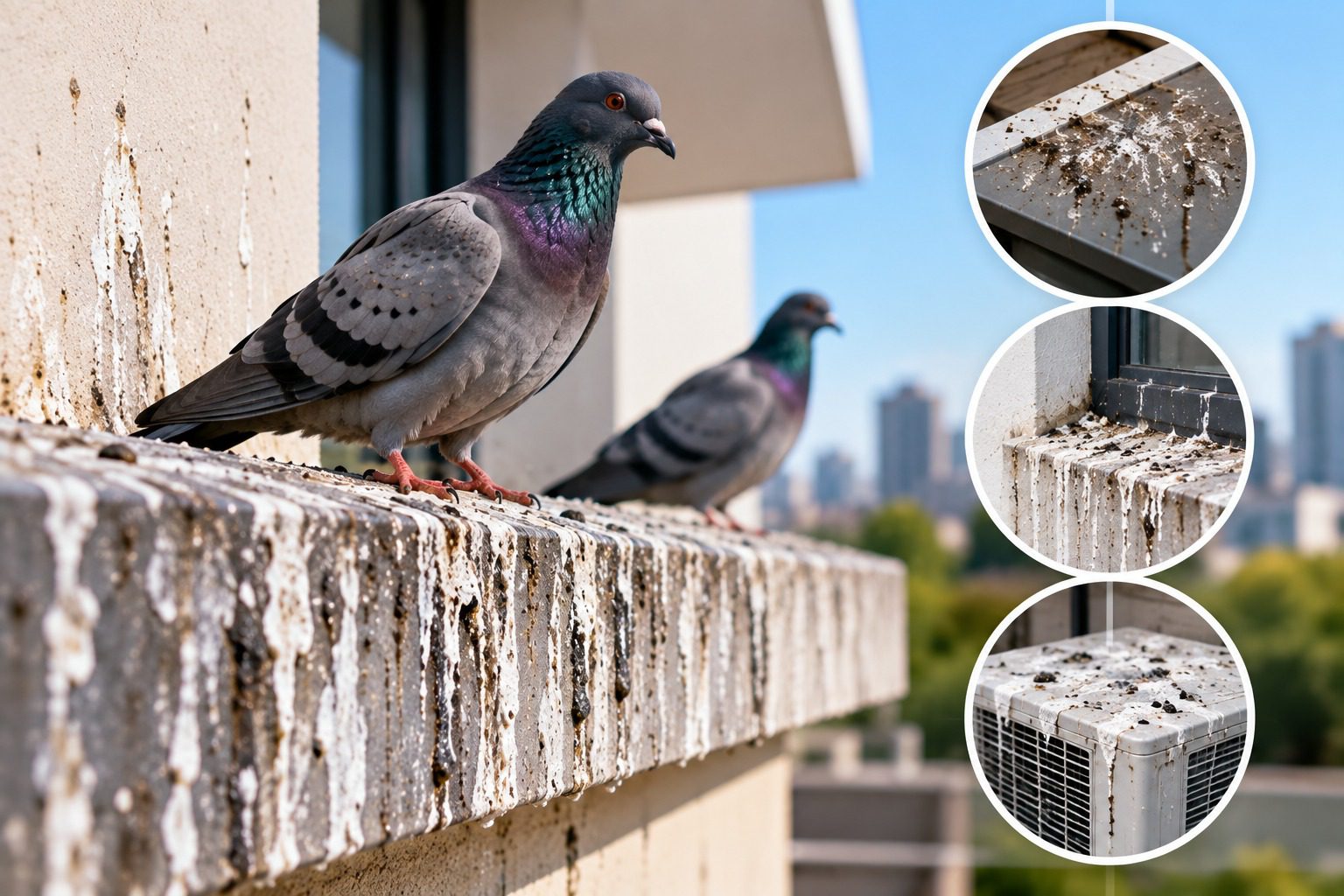
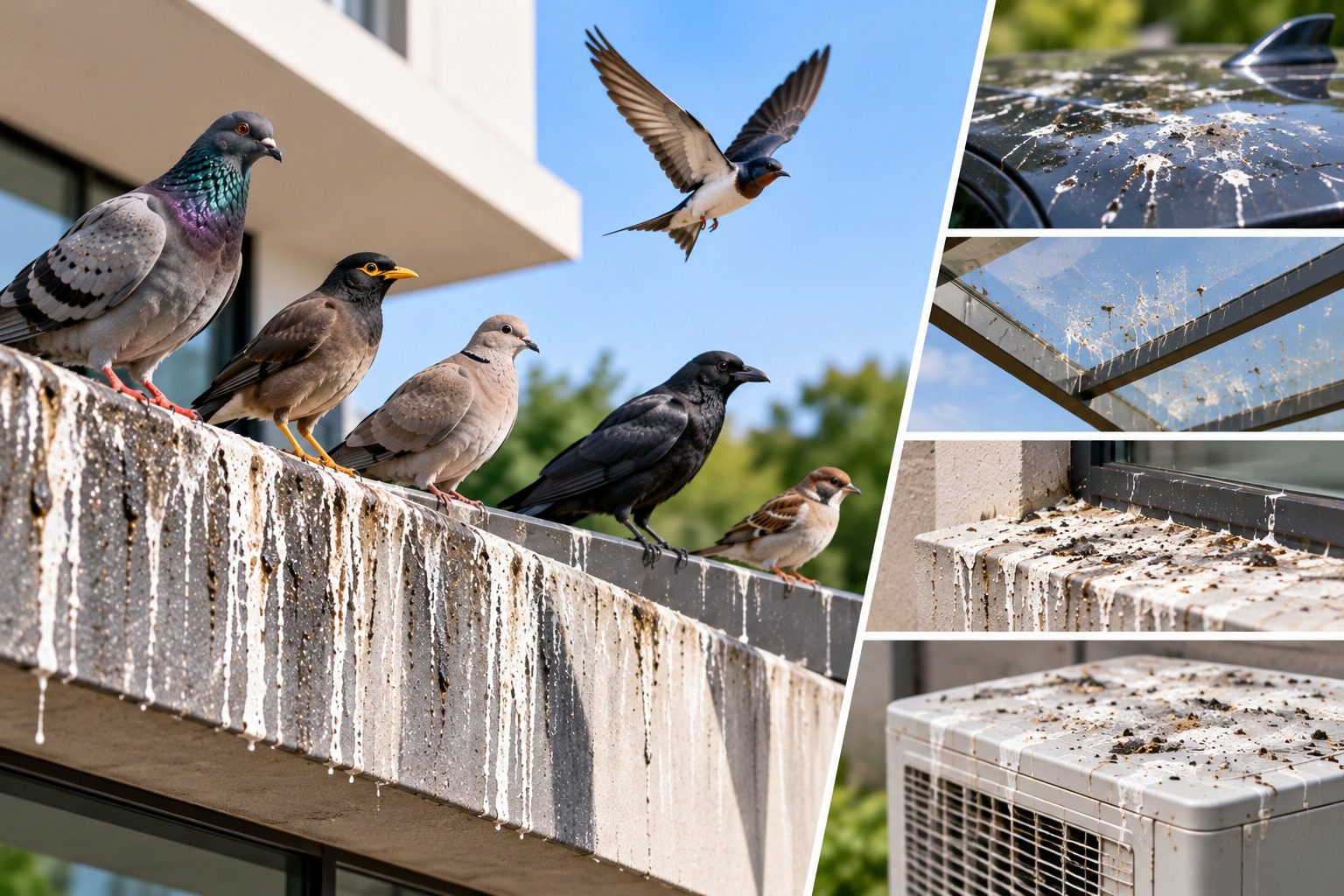
Bird droppings on balconies, roofs, ledges, paths, automobiles or any other surface are a frequent cause of cleaning problems and may suggest that birds are constantly visiting the same site.
Large numbers of birds congregating on roof edges, signs, beams, balconies or other high places can produce noise and hygiene problems and increase the amount of garbage around the house.
Effective Bird Control Melbourne begins with understanding how the birds are using the land. We assess their preferred places, modes of access and conditions which promote recurring activity before recommending appropriate control measures.
Our bird inspectors Melbourne will evaluate the impacted regions to find common congregation points for the birds, probable food supplies, nesting sites and any structural characteristics that could be facilitating the ongoing activity.
Depending on the property and problem nature we suggest reasonable actions to control bird activity. The strategy may depend on the species, the design of the building, and the space that needs to be protected.
After an assessment or treatment of the impacted areas we can provide practical recommendations on ways to reduce access to sensitive spots and reduce conditions that may attract birds to continue to gather.
Bird problems become more and more difficult to control if the same sites remain attractive and accessible. If they can quickly return, then just removing the droppings or chasing the birds off the roof may only offer short relief.
Melbourne Pest Care employs a property-based strategy to discover where birds are congregating and why they keep returning to these areas. We aim to offer realistic bird management tailored to the specific situation.
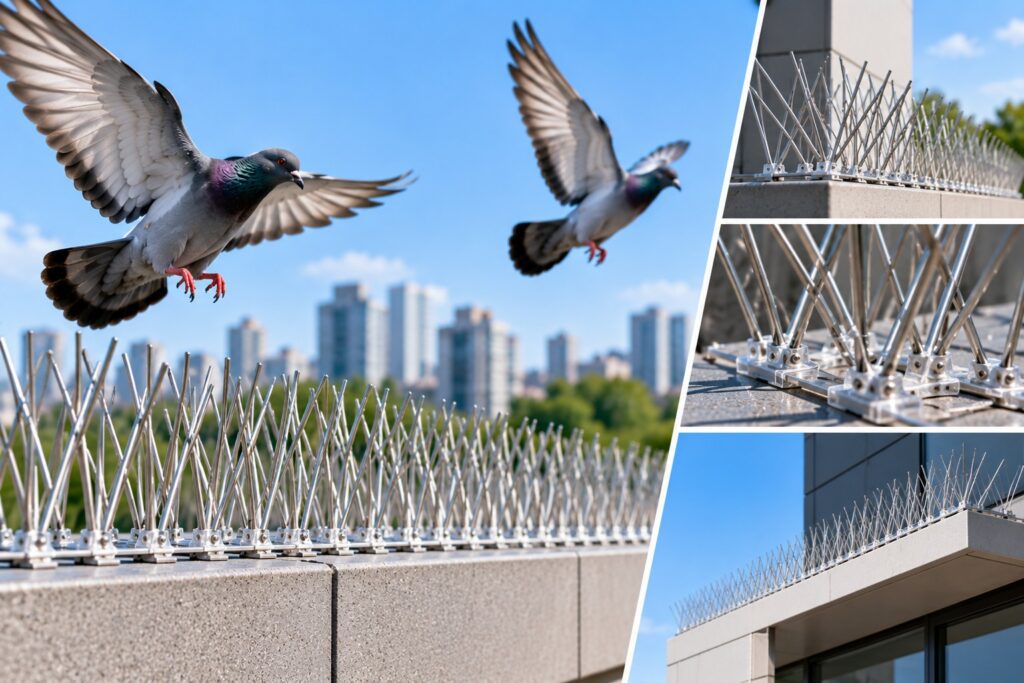
Effective Bird Deterrent for Landing Areas
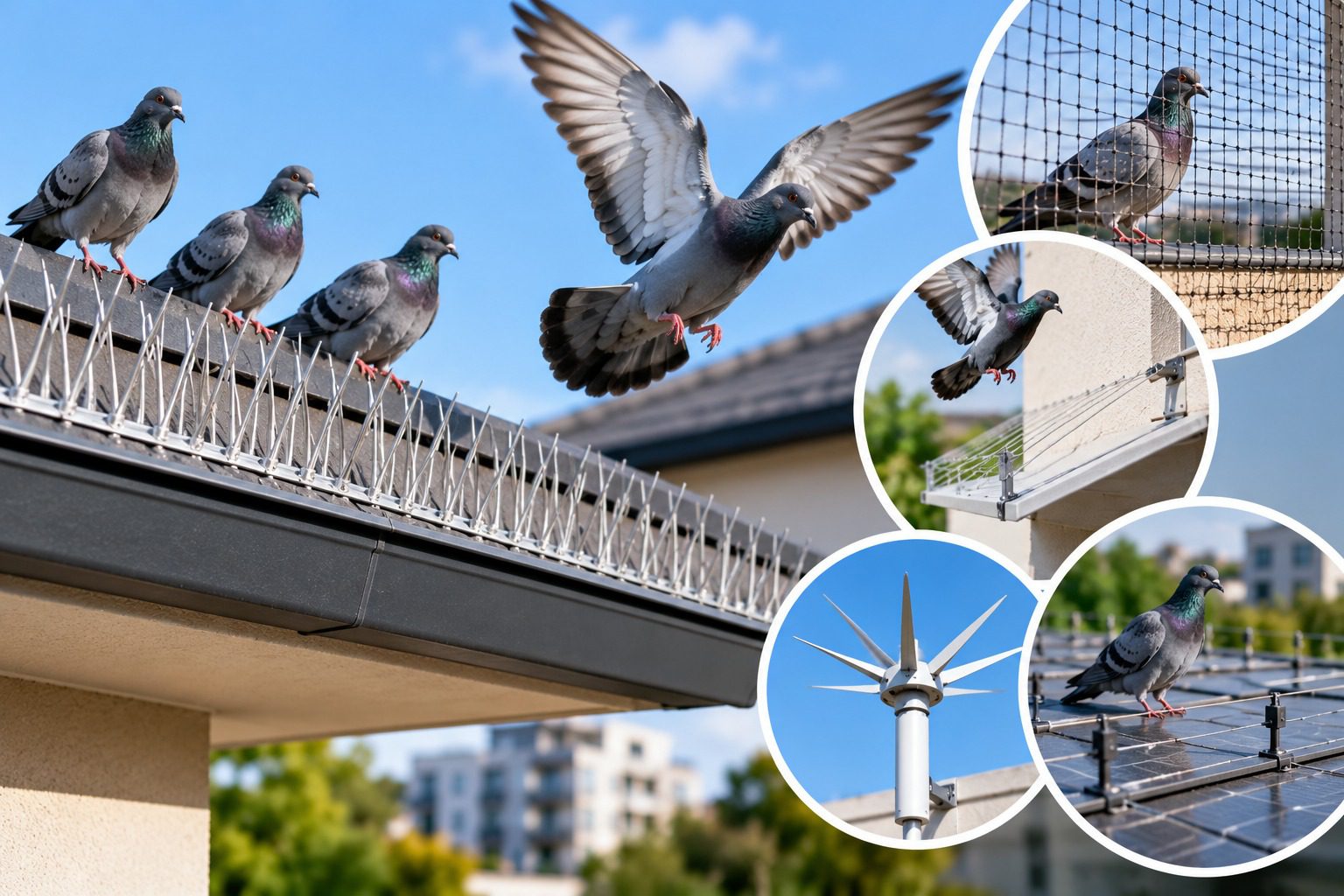
Bird spikes offer a practical answer to locations where birds routinely land, perch or roost. They can be mounted on ledges, parapets, beams, rooflines, signs, gutters and other surfaces that give suitable landing points. Spiking prevents birds from roosting in certain spots and helps avoid repeated activity without injuring the birds.
Where Bird Spikes Can Be Used
Spiking is very effective for commercial buildings, warehouses, residential complexes, shopping centers, balconies, roof structures and other properties where pigeons and similar birds tend to concentrate. The spikes can be placed on suitable surfaces based on the locations of bird activity.
How to help prevent bird problems
Bird droppings may accumulate on walkways, entrances, equipment and building surfaces. Accumulation of droppings can cause cleaning challenges, and may also promote bad odours and hygiene problems. Nest materials can also impede drainage points or grow up around building structures.
We will inspect the area of concern at Melbourne Pest Care before proposing spiking as part of an overall bird management program.
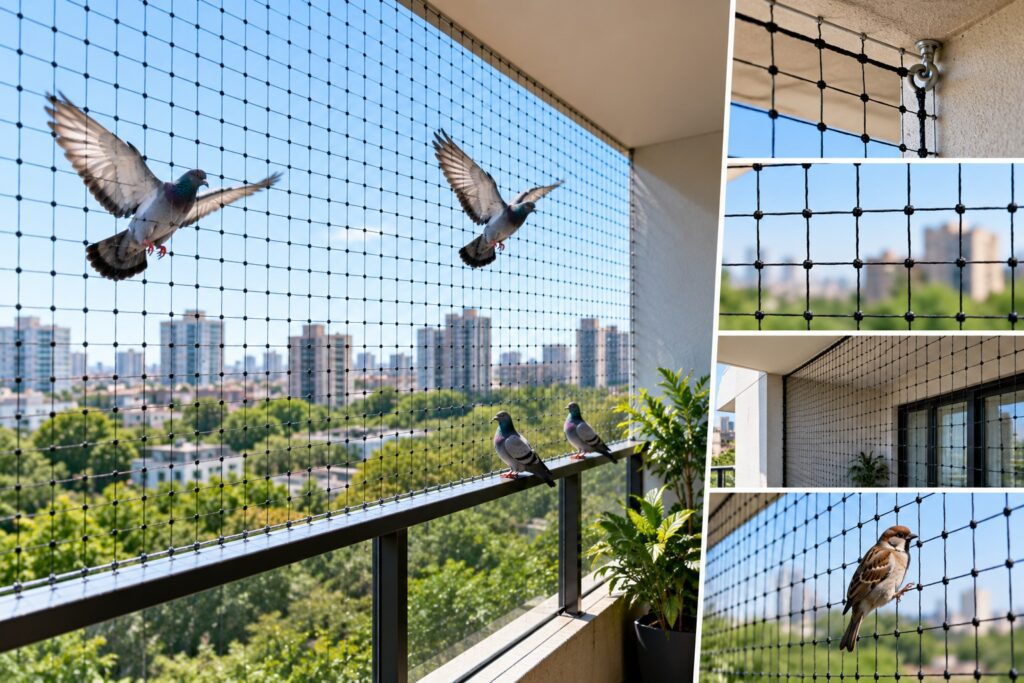
Making a Physical Barrier
Bird netting is a physical barrier that keeps birds from getting into or entering protected locations. It can be particularly effective for courtyards, balconies, warehouses, loading areas, roof structures, car parks and other situations where birds have free access.
Indoor and outdoor area protection
Netting is not a deterrent, which makes the landing surface uncomfortable, but rather makes it impossible to land at all. If put up correctly, netting may cover enormous areas and the space beneath can still be used for its intended purpose.
Good for all types of bird problems
Bird netting can be used if pigeons, sparrows, mynas or other nuisance birds keep coming into a certain area. It can also assist protect areas where birds are nesting, roosting or foraging for food and shelter.
Reduce nesting and roosting
Once birds become habituated to a certain place, just removing individual birds or nests may not be the solution. They might come back to the same place many times. Netting solves this problem by denying access to the protected area.
Melbourne Pest Care can inspect the affected area and decide if bird netting is suitable. We are concerned with a functional barrier that compliments the structure and reduces continuing bird activity and the subsequent maintenance issues.
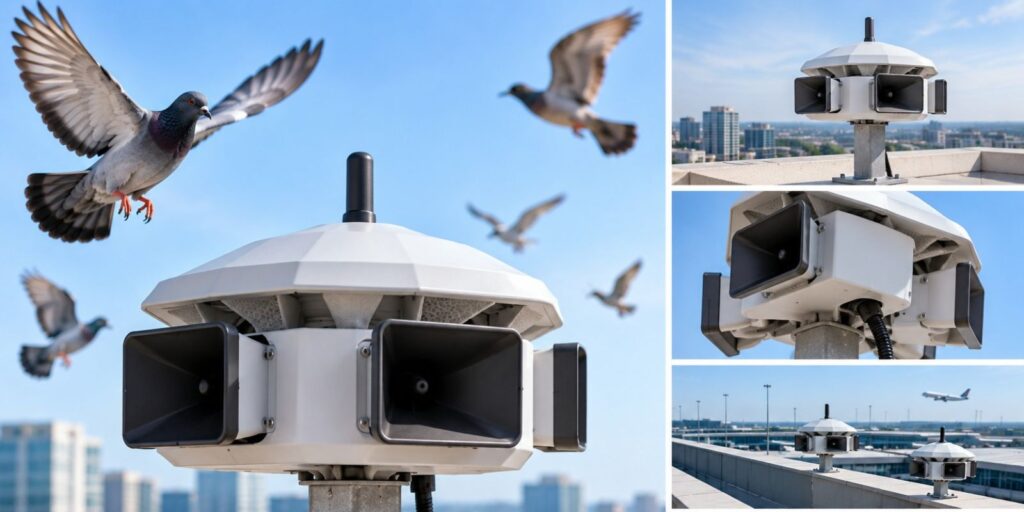
Automated Bird Deterrent Technology
The Avix Autonomic Mark 11 is an automatic bird deterrent system designed to help control bird activity across wider regions. It employs an automated method of making birds unwelcome to return to a certain spot, therefore it is useful for properties where physical deterrents are not an option.
Designed for Bird Management
Bird activity makes pest bird control difficult. Birds, once comfortable in a place, may return, even after cleaning or simple deterrent measures have been tried. Automated deterrent technology can be part of a bigger plan to change this attitude.
Suitable for Larger Areas
Avix Autonomic Mark 11 should be considered for sites where bird activity occurs over broad expanses or larger areas. Depending on the site, it can be used in combination with other bird control strategies to provide a more comprehensive strategy.
Supporting Ongoing Bird Control
Success in bird management isn't always about the particular bird. It is also about making the land less desirable as a frequent roost or feeding area. Automated deterrent devices can help to achieve this by making it less likely that birds will settle there.
We can look at the bird activity and structure at Melbourne Pest Care and then see if the Avix Autonomic Mark 11 is acceptable. Where suitable it can be used as part of a comprehensive bird management program including physical exclusion and other deterrent techniques.
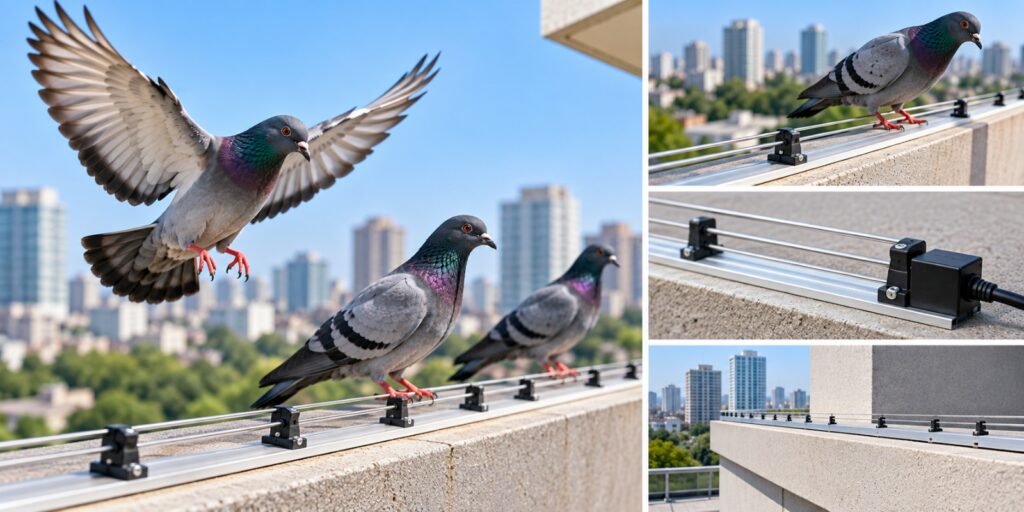
Shielding Surfaces from Bird Roost
Bird Shock Track is an electric bird deterrence system that prevents birds from landing on protected surfaces. It can be utilised on appropriate ledges, parapets, rooflines and other locations where birds perch or roost regularly.
How the Shock Track Works
When a bird comes into contact with the track, the device will produce a moderate deterrent. The aim is to deter the bird from using that surface again, rather than to injure it. Birds associate the protected region with an unpleasant experience and are so urged to locate another landing spot.
Suitable for Difficult Locations
There are certain building structures that can be hard to secure using typical bird spikes or other physical means. Another choice is Shock Track when it is essential to keep the appearance of a surface or to safeguard a certain architectural element.
Help reduce recurrent bird activity
On a day-to-day basis, bird activity can mean the need to clean up droppings and nesting materials. Birds might also return to the same ledge or roof area as a comfortable spot to rest. An appropriate deterrent in these regions can help change that trend.
Melbourne Pest Care can evaluate the property and see where the birds are most active. Bird Shock Track can be integrated, as required, into a comprehensive bird control program developed for the building and the bird species concerned.
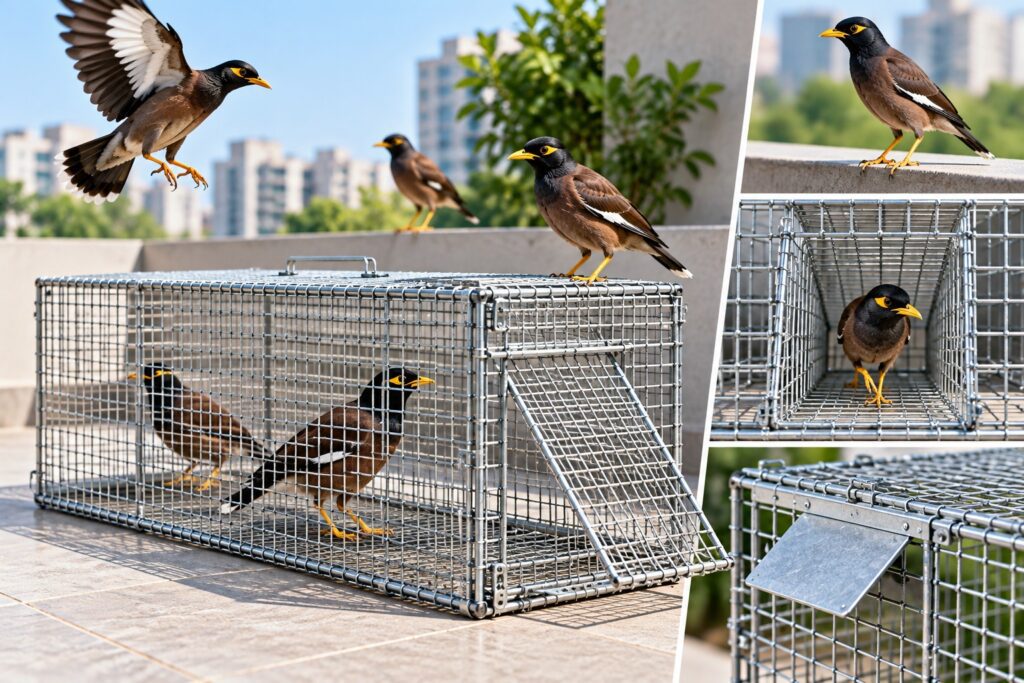
Targeted Indian Myna Management
Indian Mynas, once they locate consistent supplies of food, water or shelter, can become regular visitors. Trapping may be an option where Indian Myna activity is established and other management techniques are ineffective.
Understanding the Problem
Indian Mynas are versatile birds that can take advantage of urban situations, gardens, commercial properties and other types of areas where resources are easily available. Their activity is most apparent around food outlets, eating spaces outside, gardens, warehouses and homes with suitable nesting places.
Targeted Trapping Approach
An Indian Myna trap has been developed to assist in the control of these birds in regions of continuing activity. Trapping should not be seen as a one-size-fits-all approach. It is also a crucial part of the process to understand why the birds are drawn to the site.
Food sources, garbage, nesting chances and sheltered spaces might entice birds to come back. Tackling these issues can help to lessen the chances of ongoing activity once control measures are in place.
Melbourne Pest Care can attend sites where Indian Mynas are a regular problem and advise you if trapping is appropriate. We can also consider complementing actions that are meant to make the property less attractive to these birds and prevent reoccurring nuisance activity.
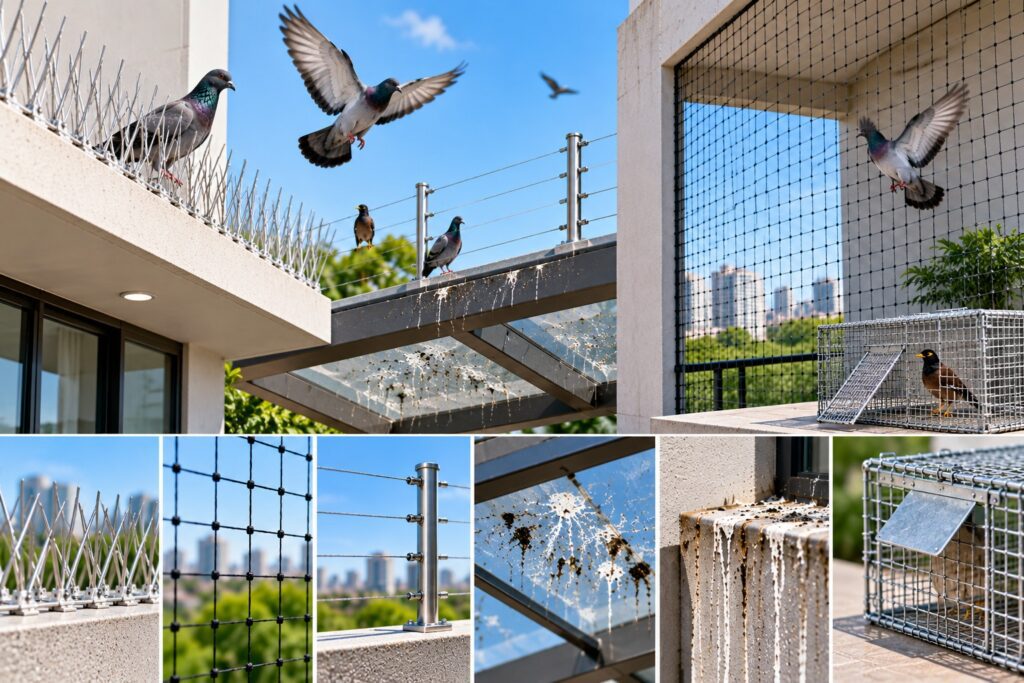
Bird Control for All Property Types
A one-size-fits-all deterrent won’t solve every bird situation. Buildings vary in design, access, height, roof construction and surroundings, and bird species behave differently too. This means that if spikes, netting, automated deterrents, shock tracks or trapping are not totally solving the problem, Melbourne Pest Care can explore further bird control solutions.
Figuring Out the Cause of Bird Activity
The first step in an effective bird management plan is to discover what is attracting birds to the property. All of these things can encourage birds to come back: food waste, accessible bins, water, nesting spots, roof cavities, ledges and protected spaces.
Combination of Control Methods
Sometimes a combination of multiple measures may be more appropriate. Physical exclusion can be utilised to deny access to a specific location, and deterrents can be used to discourage birds from landing on exposed surfaces. Changing garbage management or other attractants might also lessen the reasons birds may stay on the site.
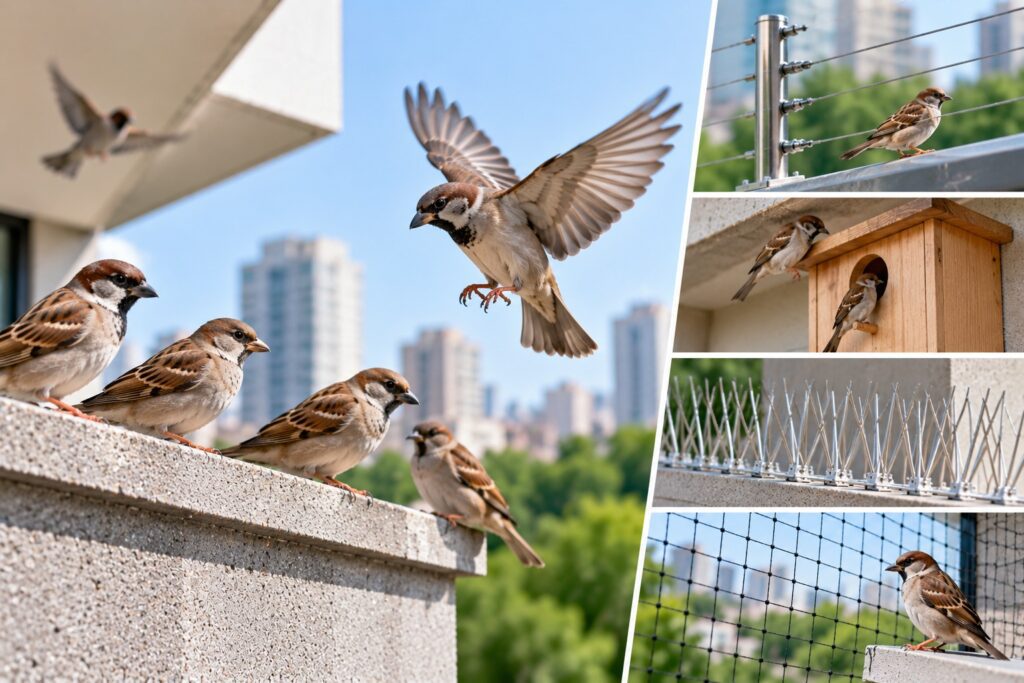
Little Birds with Big Nuisance Potential
Sparrows are prevalent across Melbourne and are able to adapt well to urban areas. They are also often found living in close proximity to people as buildings, gardens, food waste and protected structures can give all that they need. Sparrows are little, but they can become a problem if they find a regular spot to nest or feed around your property.
Where Sparrows Can Become a Problem
Sparrows can go into roof spaces, sheds, warehouses, business buildings, balconies or other sheltered places. They can nest in cavities, cracks, roof structures and other safe places. If they find a good place to nest they can keep coming back to the same site.
Cleaning and Maintenance Concerns
Areas frequented by sparrows will commonly acquire nesting materials, feathers and droppings. This could lead to more cleaning requirements in business settings. Food businesses may also have worries about birds being active repeatedly in the vicinity of outdoor eating areas or garbage storage.
We can inspect places where sparrows are nesting, foraging or roosting at Melbourne Pest Care. Depending on the site, suitable choices may be bird netting, exclusion measures, deterrents or other management approaches. The goal is to limit access to areas of concern and to make the property less attractive for continued sparrow activity.
An Adaptable Urban Bird
Indian Mynas are quite flexible and can do well in circumstances if food, shelter and nesting possibilities are widely accessible. Their usage of urban places means they can be a recurrent annoyance for homes, businesses and other properties across Melbourne.
Why Indian Mynas Come to Properties
Indian Mynas are drawn to easy food, garbage, outside dining areas, gardens and sheltered nesting areas. Once they find a steady food source or a place to roost, they can come back again and again.
Nesting and Roosting Activity
They may nest in cavities of buildings, roof spaces and other sheltered sites. Their presence can mean droppings, nesting materials and constant cleaning needs. Birds often assemble in busy areas and frequent activity might often disturb them.
Melbourne Pest Care can survey your property to identify where Indian Mynas are feeding, nesting or roosting. Then we can look at appropriate bird control tactics such as targeted trapping and deterrence or exclusion methods” The problems repeat because both the immediate bird activity and the circumstances that attract them are addressed.
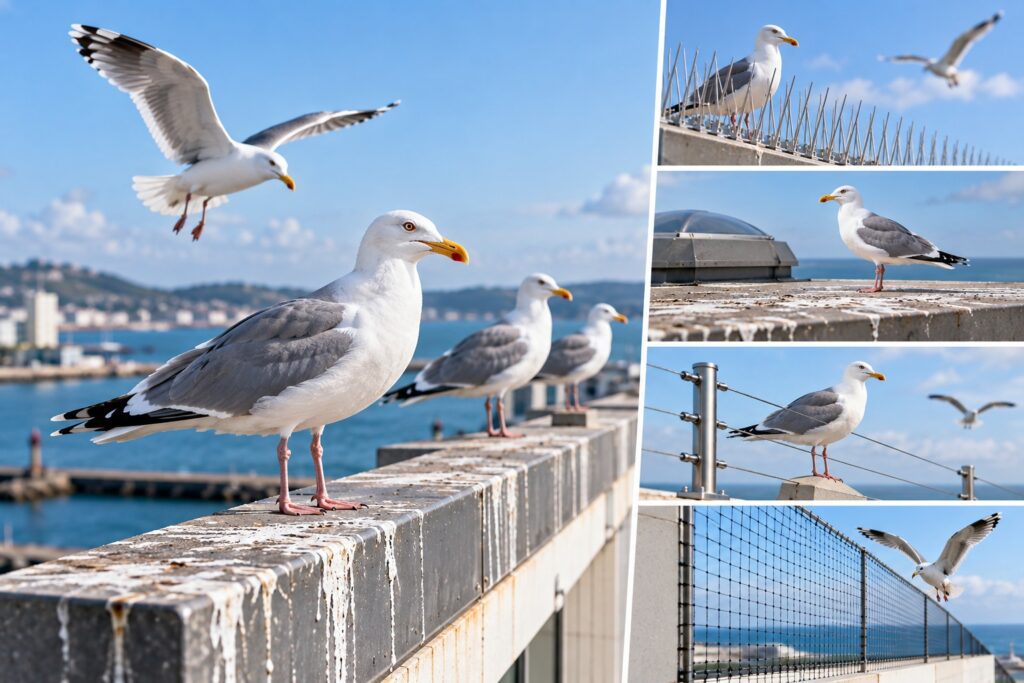
Managing Coastal and Urban Seagull Activity
Melbourne's coastal locations, waterways, commercial precincts and food related enterprises are often visited by seagulls. They are very flexible and can go inland when good sources of food are available.
Why Seagulls Can Be a Nuisance
Open food waste, refuse bins, outdoor eating locations and improperly sealed waste might be attractive to seagulls. Other elevated sites such as commercial roofs are also good resting and nesting locations.
Droppings and Property Issues
The frequent presence of seagulls can lead to droppings collecting on rooftops, sidewalks, automobiles, outdoor furniture and building surfaces. Nesting materials can generate further maintenance problems, particularly if birds nest in hard-to-reach spots.
Melbourne Pest Care can inspect your seagull landing, breeding and feeding sites and advise the most suitable course of action. We aim to help lessen the recurring seagull problems and protect the portions of the property that are being impacted.
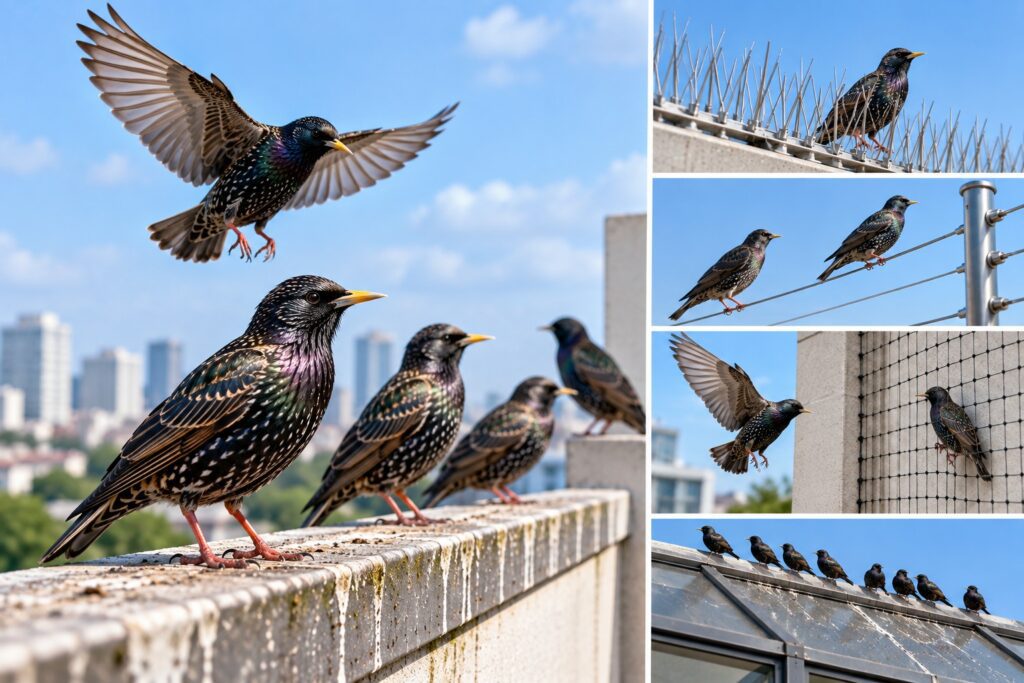
Persistent Birds in Urban Areas
They are adaptive birds and can use a variety of habitats. Common Starlings are very adaptable birds. They may swarm around houses, gardens, business areas, agricultural sites and regions where food and shelter can be found.
Where Starlings Gather
Starlings sometimes exploit roof areas, building cavities, ledges and sheltered structures for nesting and roosting. They may collect around food waste, or in places where insects or other food sources are plentiful.
Problems Associated with Bird Activity
While a few birds might not seem like a big deal, regular activity can lead to a build-up of droppings, nesting materials and garbage around a property. Large gatherings can generate more apparent cleaning and maintenance problems.
Starlings may also return to the same places over and over again if they offer stable shelter or food. Cleaning up visible waste doesn’t address the reasons they continue to use the place. Melbourne Pest Care can detect probable access points, nesting places and attractants for Common Starlings by inspecting impacted areas. The results allow recommendations of appropriate interventions that can aid in managing current bird activity and limit the chance of the same areas becoming habitual roosting or nesting sites.
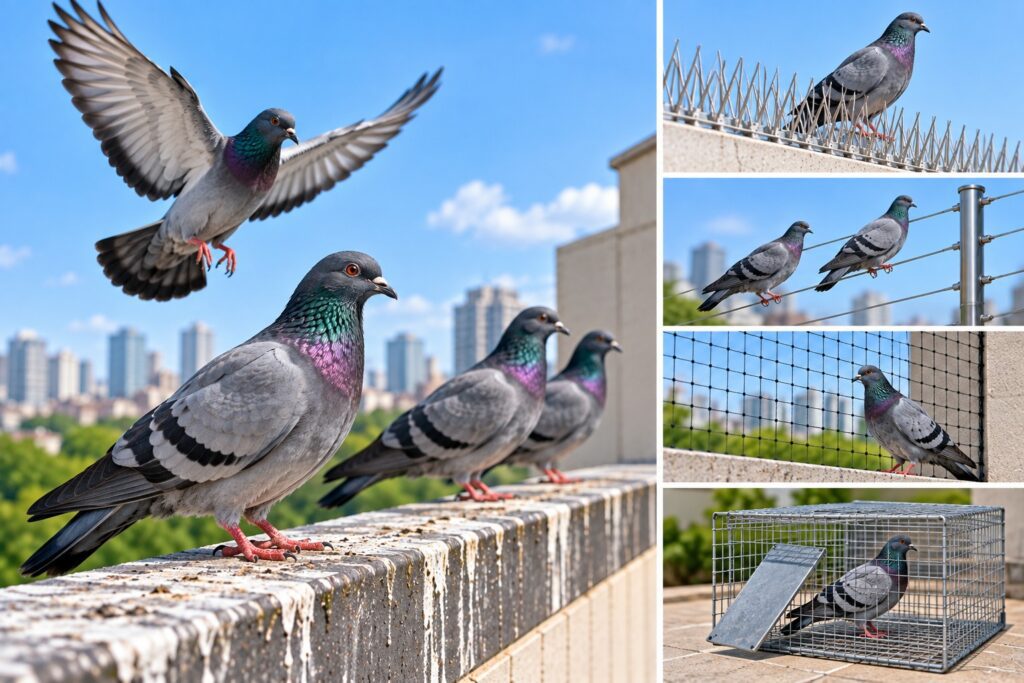
A Typical Urban Bird Problem
Pigeons are one of the most prevalent nuisance birds found around residences, businesses, apartment complexes, warehouses and commercial premises in Melbourne. They are highly adaptable to urban areas and are able to utilise ledges, roofs, balconies, signs, beams and other structures for resting and nesting purposes.
Why Pigeons Keep Coming Back
Pigeons generally return to places where there is regular shelter, food or easy landing sites. If access is not restricted, then removal of droppings or removal of nesting material may only give a transient benefit if a regular roost site is established.
Droppings and Nesting Issues
A buildup of pigeon droppings can lead to major cleaning and maintenance headaches. They can cover balconies, ledges of buildings, pathways, machinery and other surfaces. Roof structures, gutters and cavities in buildings can also collect nesting material.
Pigeon Control Options
Different properties call for different approaches. Bird spikes prohibit pigeons from landing on suitable surfaces, and bird netting can limit access to balconies, courtyards and enclosed locations. Bird Shock Track may be explored for suitable ledges and parts of roofs. Other deterrent methods can be employed depending on the site.
A Practical Approach to Pigeon Management
Melbourne Pest Care can determine where pigeons are entering, landing, nesting and roosting. We also look at what would make them want to hang around the property. Depending on the site characteristics we can offer suitable exclusion or deterrent measures to assist limit repeated pigeon activity and protect impacted areas from ongoing droppings, nesting and cleaning concerns.
Roofs can offer elevated perching sites, shelter, warmth and protection from disturbance. The presence of food sources and close nesting areas can also induce repetitive activity.
You can use bird deterrent techniques to make a location less attractive or accessible. The correct choice relies on the building structure and the type of bird activity.
Bird droppings can build up and cause cleaning and maintenance issues and may harm some surfaces over time. Regular management helps prevent excessive accumulation.
Yes. Bird control might be considered for offices, warehouses, retail premises, factories, car parks and other commercial sites suffering from persistent bird activity.
Birds may return provided food, shelter, breeding places, or convenient perching points are available. Combining practical preventive with control methods helps reduce repetition.

Mon - Sat: 09:00 AM - 05:00 PM
Copyright © 2026 Melbourne Pest Care. All rights reserved.

No hidden fees. The price we quote is the price you pay.